What Every DFW Homeowner Needs to Know About Emergency Water Damage
A burst pipe at 2 a.m. A washing machine line that let go while nobody was home. A flash flood that pushed water under the back door. In Dallas–Fort Worth, water damage events happen fast — and what a homeowner does in the first few hours determines whether the outcome is a manageable repair or a months-long restoration project.
Texas Water Doctor’s water damage restoration team responds 24/7 across the DFW Metroplex, and this guide covers exactly what to do from the moment water is discovered through final clearance.
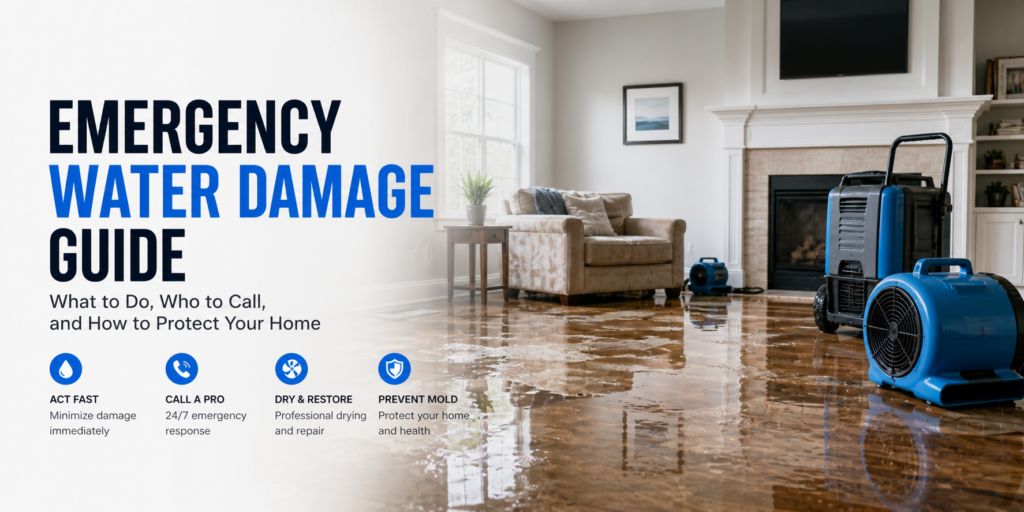
DFW isn’t a forgiving environment for water damage. Average humidity in the Dallas area runs between 60–70%, which means wet materials dry slowly on their own — and mold doesn’t wait. The region’s clay soils shift with moisture, creating foundation vulnerabilities that worsen if water intrusion goes unaddressed.
Winter freeze events, like the catastrophic 2021 storm that caused more than $20 billion in Texas property damage, can overwhelm hundreds of homes simultaneously. Understanding these local factors isn’t background noise. It’s the reason response speed and IICRC-certified technique matter more here than in drier climates.
Key Takeaways
- Speed determines cost. Mold can begin growing within 24–48 hours of a water event. Every hour of delay drives restoration costs higher and mold risk lower.
- Safety comes before salvage. Standing water near electrical sources is a lethal hazard. Turn off power at the breaker before entering any flooded room.
- IICRC standards protect homeowners. Certified restoration following S500 water damage and S520 mold protocols ensures work is documented in a format insurance adjusters accept.
- DFW has specific risk factors. Freeze events, clay soils, high humidity, and hard water make Dallas–Fort Worth homes more vulnerable than most U.S. markets.
- Insurance documentation starts on day one. Photos, moisture readings, and written reports taken during restoration directly affect claim approval and supplement recovery.
The Most Common Causes of Water Damage in Dallas–Fort Worth
Knowing what caused the water event matters immediately. The source determines the water category — which in turn determines how technicians handle the extraction, what personal protective equipment is required, and how aggressively materials need to be removed. Here are the most common events Texas Water Doctor responds to across DFW:
Burst and Frozen Pipes
North Texas freeze events cause pipes to burst inside walls, attics, and crawl spaces — often without any visible sign until water has saturated structural cavities. Older homes in neighborhoods like Oak Cliff, Irving, and East Fort Worth carry the highest freeze risk due to uninsulated exterior plumbing runs.
Appliance Failures
Washing machine supply lines, dishwasher drain hoses, refrigerator ice maker lines, and water heaters are among the most common non-weather causes of home water damage. These events are often slow — a small leak running for hours or days before discovery — which increases the likelihood of mold growth behind walls.
Storm and Flash Flooding
DFW sits in a high-frequency severe weather corridor. Flash floods can push water through doors, window wells, and foundation cracks in minutes. Crawl spaces and basements in low-lying areas of Grand Prairie, Arlington, and South Dallas are especially vulnerable during the spring storm season.
Roof Leaks
Hail damage — extremely common in North Texas — compromises roof membranes, which then allow water intrusion during subsequent rain events. By the time a ceiling stain appears, water has often saturated insulation and the top of drywall for weeks.
Sewage Backups
Heavy rainfall overwhelms municipal sewer systems in parts of DFW, causing backflow into home drains. Sewage water is classified as Category 3 — the most hazardous water category — and requires full biohazard protocols during extraction and disposal.
AC Condensate Overflows
Clogged condensate drain lines on HVAC systems are a summer-specific DFW hazard. When the drain pan overflows, water saturates ceiling drywall and insulation directly above living spaces — often without any visible warning until a ceiling collapses.
Step-by-Step Emergency Response: The First 24 Hours After Water Damage
These steps are in order of priority. Don’t skip ahead. The most dangerous mistakes happen when homeowners move to salvage before safety is confirmed.
Step 1 — Stop and Assess for Safety
Before entering any room with standing water, locate the breaker panel and cut power to the affected area. Water and live electricity are a fatal combination. If the breaker panel itself is in a flooded area, call the utility company and wait. No piece of furniture or flooring is worth electrocution. If gas lines run through the affected area and there’s any smell of gas, evacuate immediately and call the gas company before re-entering.
Step 2 — Stop the Water Source
Shut off the main water supply valve if the source is a plumbing failure. For most DFW homes, the main shutoff is located near the water meter at the street or on the exterior foundation wall closest to the street. If the water source is a roof leak or storm intrusion, place buckets and lay plastic sheeting over belongings — stopping the source means minimizing ongoing saturation while help is dispatched.
Step 3 — Document Everything Before Touching Anything
Walk every affected room with a phone camera before moving furniture or beginning any cleanup. Shoot wide shots, then close-up shots of water lines on walls, saturated flooring, and damaged contents. This documentation is the foundation of the insurance claim.
A professional restoration team will add moisture meter readings and thermal imaging to the record, but the homeowner’s initial photos establish the baseline condition before any work begins.
Step 4 — Remove Standing Water if Safe to Do So
Wet-dry vacuums handle small standing water volumes well. Mops and towels are useful for thin surface water on hard floors. Don’t use standard household fans on carpet or wet walls — surface air movement without structural drying equipment only moves moisture deeper into materials.
A professional extraction team using truck-mounted extraction units will remove far more water volume from carpet padding, subfloors, and wall cavities than any DIY approach can reach.
Step 5 — Move Salvageable Contents to a Dry Area
Remove furniture, rugs, and soft goods from the wet zone. Furniture left sitting on wet carpet accelerates both carpet damage and mold growth. Stack furniture on aluminum foil squares or plastic film if it must remain in the affected room temporarily — this prevents staining and slows wicking.
Step 6 — Call a Certified Restoration Company
The faster professional extraction and structural drying equipment is deployed, the lower the total restoration cost. IICRC S500 standards for water damage restoration define specific drying targets — measured in grain depression and moisture content — that household fans and dehumidifiers cannot achieve.
A certified team brings industrial air movers, LGR (low-grain refrigerant) dehumidifiers, and moisture mapping tools that dry structural cavities from the inside out.
Why Mold Is the Hidden Threat in Every DFW Water Event
Mold colonization begins within 24–48 hours of a water event under the right conditions — and DFW’s humidity creates exactly those conditions year-round. The danger isn’t just visible surface mold. Mold grows inside wall cavities, under subfloors, and behind baseboards where it can thrive for weeks before any visible or olfactory sign appears. By the time a homeowner smells something musty, the colony is already established.
Texas Water Doctor follows IICRC S520 mold remediation protocol on every job. The S520 standard defines the science behind mold containment, removal, and clearance testing — and it’s the protocol that insurance adjusters and industrial hygienists recognize as the industry baseline.
Generic “certified” claims from competitors don’t specify which standard they follow. The S520 designation means the work holds up to independent clearance testing, which is how a homeowner knows remediation actually worked.
Signs Mold May Be Present
- Musty odor that doesn’t clear after drying
- Discoloration on drywall, baseboards, or ceilings
- Warping or buckling of wall surfaces
- Allergy or respiratory symptoms worsening indoors
- Black, green, or gray spotting on any surface
What Prevents Mold After Water Damage
- Industrial dehumidification reaching IICRC drying targets
- Antimicrobial treatment applied to affected materials
- Moisture content verified at or below 16% before close-up
- Removal of unsalvageable porous materials (drywall, insulation)
- Post-drying air quality testing confirming clearance
How to Handle Insurance After Water Damage in DFW
Most DFW homeowners have never filed a water damage claim. The process is more involved than a car insurance claim, and the documentation requirements are significantly higher. Here’s what to expect and how Texas Water Doctor supports homeowners through it.
What Homeowners Insurance Typically Covers
Standard homeowners insurance policies in Texas cover sudden and accidental water damage — a burst pipe, an appliance failure, an AC overflow. They don’t cover flooding from outside the home, which requires a separate flood insurance policy through the National Flood Insurance Program (NFIP) or a private carrier. This distinction matters enormously in DFW, where storm flooding and plumbing failures can both happen in the same event.
Documentation That Makes Claims Succeed
Insurance adjusters approve claims based on documentation quality. A restoration contractor that arrives without moisture meters, thermal imaging cameras, and a written drying log creates a documentation gap that adjusters will use to minimize payout. Texas Water Doctor provides photos, moisture readings, daily drying logs, and written reports on every job — the same documentation package that supports supplement negotiations when initial estimates fall short of actual damage scope.
Working With Insurance Adjusters Directly
Texas Water Doctor works directly with all major insurance carriers, including State Farm, Allstate, Farmers, Liberty Mutual, Travelers, and Geico. The company handles documentation submission, scope-of-work communication, and supplement negotiations — removing the homeowner from the middle of a process most people have never navigated before.
DFW-Specific Water Damage Risks Homeowners Should Know
Dallas–Fort Worth isn’t a typical water damage market. Several local factors make emergency response protocols more critical here than in lower-risk regions:
Winter Freeze Events
The February 2021 winter storm caused more than $20 billion in Texas property damage and taught hundreds of thousands of DFW homeowners that North Texas infrastructure isn’t built for sustained freeze conditions. Pipes in attics, exterior walls, and crawl spaces that aren’t properly insulated fail fast when temperatures drop below 20°F for extended periods. Freeze season content in this blog covers pipe winterization in detail — but the emergency response protocol after a pipe burst is the same regardless of season.
Clay Soil and Foundation Movement
DFW sits on expansive clay soils that absorb water and swell — then contract dramatically when dry. This movement creates foundation cracks that allow water intrusion during rain events, even without any plumbing failure. Homeowners who dismiss minor water seepage as a foundation issue and not a restoration issue often discover mold in crawl spaces and basement walls months later.
Hard Water Complicating Appliance Failure
DFW tap water runs at 15–20 grains per gallon of hardness — significantly above the national average. Hard water deposits accelerate scale buildup inside water heater tanks, washing machine hoses, and supply lines.
This buildup degrades connections over time and increases the likelihood of sudden appliance-related water damage. Whole-home water treatment addresses the root cause; restoration addresses the aftermath when prevention doesn’t come first.
Frequently Asked Questions About Emergency Water Damage in DFW
How quickly should water damage be addressed in DFW?
Within the first hour if possible. DFW’s high ambient humidity means structural materials absorb and retain moisture faster than in drier climates. Mold colonization can begin within 24–48 hours, and water that wicks into wall cavities or subfloors significantly increases both extraction difficulty and total restoration cost the longer it sits.
Can a homeowner dry out water damage without a professional?
Homeowners can remove surface water with wet-dry vacuums and move contents to dry areas. However, household fans and consumer dehumidifiers don’t reach the moisture content levels required by IICRC S500 standards. Water trapped inside walls, under flooring, and in subfloors requires industrial equipment and moisture verification to confirm complete drying — without which mold growth is likely.
What does Category 1, 2, and 3 water mean?
These are IICRC water classifications. Category 1 is clean water from a supply line or appliance. Category 2 (gray water) contains contaminants from sources like dishwasher overflows or washing machine drains. Category 3 (black water) is grossly contaminated — sewage backups or outdoor flood water — and requires full biohazard handling protocols during extraction and disposal.
How long does water damage restoration take in DFW?
The drying phase typically takes 3–5 days for Category 1 events affecting a single room. Larger losses involving multiple rooms, subfloor damage, or mold remediation can extend the process to 1–3 weeks. DFW’s humidity can extend drying timelines in homes without adequate HVAC, which is why industrial dehumidification equipment runs continuously until moisture targets are met.
Does homeowners insurance cover water damage from a burst pipe?
Yes — sudden and accidental water damage from a burst or frozen pipe is covered under standard Texas homeowners insurance policies. Gradual leaks, long-term seepage, and flooding from outside the home are generally not covered without separate flood insurance. Proper documentation from a certified restoration company is critical to claim approval.
How do DFW freeze events affect water damage claims?
Winter storm events create surge demand across DFW, which can slow insurance adjuster response times and restoration company availability. Texas Water Doctor maintains 24/7 emergency response year-round and prioritizes dispatch during weather emergencies. Homeowners who act within the first few hours — even just documenting damage before extraction — are in a significantly stronger position for claim approval.
What is the IICRC and why does it matter for restoration?
The Institute of Inspection Cleaning and Restoration Certification sets the technical standards for water damage restoration (S500) and mold remediation (S520). IICRC certification means a contractor is trained to specific protocols — not just general best practices. Insurance adjusters recognize IICRC-compliant documentation, which is why certification directly affects claim outcomes for homeowners.
Can water damage cause mold even after the area looks dry?
Yes. Surface appearance doesn’t reflect moisture content inside structural materials. Drywall, insulation, and subfloor materials can appear dry to the touch while retaining enough moisture inside to sustain mold growth for weeks. Moisture meters and thermal imaging cameras reveal what visual inspection misses — which is why professional verification matters before any restoration is closed out.
Does Texas Water Doctor work directly with insurance companies?
Yes. Texas Water Doctor works directly with all major carriers including State Farm, Allstate, Farmers, Liberty Mutual, Travelers, and Geico. The company manages documentation, scope-of-work submission, and supplement negotiations on the homeowner’s behalf — removing the coordination burden from people already dealing with a stressful property event.
What areas of DFW does Texas Water Doctor serve?
Texas Water Doctor serves 37+ cities across Dallas and Tarrant counties, including Dallas, Fort Worth, Arlington, Plano, Irving, Grand Prairie, Frisco, McKinney, Carrollton, Lewisville, and surrounding communities. The company operates 24/7 with emergency dispatch available around the clock for all service areas.
Getting Help After Water Damage in DFW
Water damage doesn’t follow business hours. Texas Water Doctor provides 24/7 emergency response across the Dallas–Fort Worth Metroplex, with owner KJ Raja personally involved on every job from initial inspection through final walkthrough. IICRC-certified technique, detailed insurance documentation, and direct carrier communication are standard on every project — not optional add-ons. For homeowners in the middle of a water emergency, the fastest path to a lower cost and a faster recovery starts with a single call.
Ready to Get Started with Emergency Water Damage Restoration?
Texas Water Doctor provides 24/7 IICRC-certified emergency response across Dallas–Fort Worth. Owner KJ Raja handles every inspection, every insurance claim, and every project personally. Get a free mold inspection and start the recovery process today.