What to Do When There’s Water in the Basement After Rain
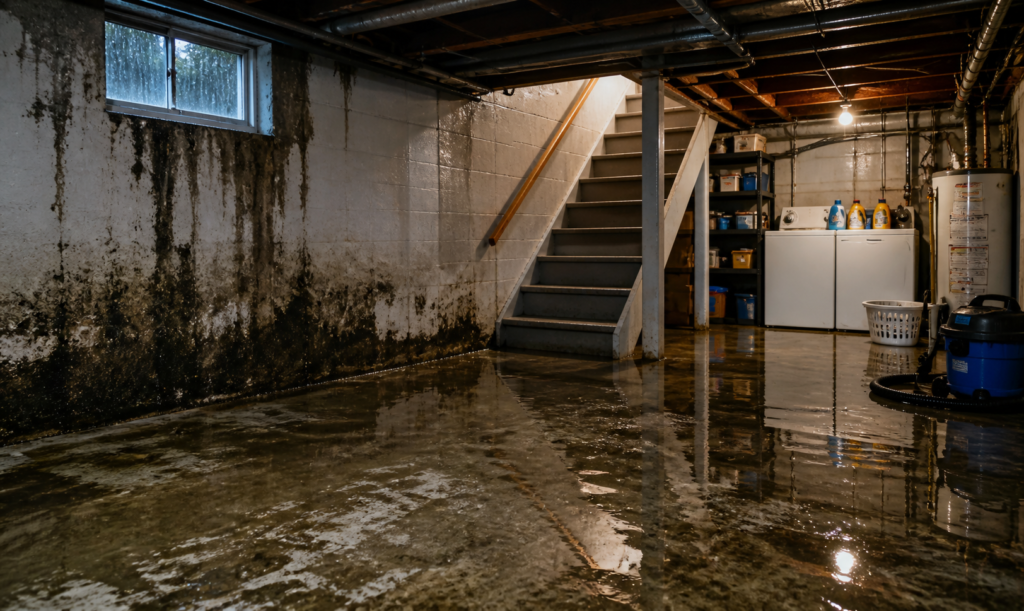
Rain came. Now there’s water in the basement. The instinct is to grab a mop and get moving — and honestly, that’s not always wrong. But the first few calls made in that moment matter more than most homeowners expect. Texas Water Doctor handles water damage restoration calls across DFW around the clock, and the ones that go smoothly share one thing: the homeowner knew what to do first.
This guide is specifically about basement water that came in during a storm. Not a burst pipe. Not a washing machine overflow. Rain — and everything that comes with it.
Key Takeaways
Key Takeaways
- Rain entry is different from other flooding. Water coming in through window wells, foundation cracks, and overwhelmed sump pits follows different patterns than a burst pipe — and the fix is different too.
- You have about two hours. That’s the window where DIY cleanup actually works. After that, water is in the walls and professional equipment is the only thing that gets it fully dry.
- Clean rainwater doesn’t stay clean for long. After 24 hours, even Category 1 water picks up enough bacteria to be treated as contaminated. Speed matters more than the water source.
- Document the storm before you touch anything. Weather alerts, timestamps, and video of the entry point are what turn a rain damage claim into a covered claim.
- One flood usually means the conditions for another are already there. Gutters, yard grade, sump capacity, and foundation cracks are the four things worth checking before the next storm hits.
Why Rain Floods Are a Different Problem
A burst pipe floods from above. Rainwater infiltrates from below and outside — through window wells, foundation cracks, seams around pipe penetrations, and overwhelmed sump pits. That entry point changes everything about what you’re dealing with and how to handle it.
The water itself may start clean. But once it crosses soil, it picks up what’s in that soil. And once it’s inside, it moves toward the lowest point and starts wicking upward into whatever it touches. A window well overflow looks minor. What’s behind the drywall may not be.
Step One: Don’t Go Down There Yet
Before touching anything, check one thing: is power still running to the basement?
Standing water and active electricity are a lethal combination. If there are outlets, appliances, a water heater, or a breaker panel anywhere near the water, stay out. Turn off the circuit breaker from a dry area first. If the breaker box itself is in the basement, call an electrician before setting foot in there. Don’t guess on this.
Once that’s confirmed, look for structural warning signs. A ceiling that’s sagging, walls that have bowed, or a floor that doesn’t feel right underfoot — any of those signal that the flooding hit the structure. Call a professional before entering.
If the area is clearly safe — power off, structure solid — then move to the next step.
How Rain Gets Into a Basement (And Why It Matters)
The entry point determines the damage pattern and often the fix. Here are the four most common rain entry sources in DFW homes:
Window wells. These are the most common culprit during heavy storms. The well fills faster than it can drain, and water pushes in around the window frame. Usually Category 1 — clean water — if caught quickly.
Foundation cracks. North Texas clay soil expands and contracts with moisture, and over time that movement opens hairline cracks in foundation walls. During a heavy rain, hydrostatic pressure pushes water through those cracks. Even a crack that’s been dry for years can start leaking when the soil gets saturated enough.
Sump pump failure. The pump can’t keep up during a sustained downpour, especially if the float switch sticks or the discharge line freezes. Sometimes it’s a dead battery on the backup unit. Either way, water rises in the pit and spills into the basement.
Poor grading or gutter failure. Gutters that back up dump water right at the foundation line. Same with soil that slopes toward the house instead of away. Both direct surface water to the worst possible spot — the edge of the foundation — which is how water finds its way in.
Knowing the entry point matters because it tells you whether this is a one-time event or a recurring problem. A window well that overflowed once is different from a foundation crack that’s been seeping for years.
Is It Safe to DIY?
Rain-entry flooding can sometimes be handled without calling in a crew. The window is narrow and the conditions have to be right. DIY is reasonable when all of the following are true:
- The water entered through a known rain source — window well, visible crack, sump overflow
- The affected area is under 10 square feet
- It’s been sitting for fewer than two hours
- The floor is concrete with no carpet, drywall, or wood subfloor contact
- There’s no odor
In that scenario: wet/dry vacuum to remove the water, industrial fans to move air, a dehumidifier to pull moisture out, and monitoring for any musty smell over the next 72 hours.
Call a professional when any of these flip: area larger than a small bathroom, sitting longer than two hours, any finished materials got wet, or there’s any smell at all. Rain that enters through soil contact can carry bacteria and organic material even if it looks clean. When in doubt, treat it as contaminated.
Texas Water Doctor responds to rain-related basement flooding calls across Dallas-Fort Worth 24 hours a day. Equipment goes in the same day the call comes in.
The Storm-Specific Documentation Checklist
Insurance documentation for rain damage is different from a standard water claim — the link between the storm and the damage has to be clear. Before touching anything:
- Take video of the entire space, including where the water appears to be entering
- Screenshot or save any weather alerts active at the time
- Photograph the window well, sump pit, or foundation area where water came in
- Note the approximate time you first discovered the water
That last one matters more than people realize. Adjusters look at claim timing against weather records. A photo with metadata from 11pm during a documented storm event tells a much cleaner story than a phone call the next morning with no documentation.
One important distinction for homeowners in Dallas and Fort Worth: standard homeowners policies typically cover sudden, accidental water damage from things like a sump pump overflow during a storm or a window well failure. Water that rises from outside — groundwater seeping through the foundation due to general flooding — usually requires a separate flood insurance policy. They’re two different coverages, and most people don’t know the difference until they’re filing a claim.
Why This Keeps Happening During Heavy Rain
One rain flood usually means the conditions for another are already in place. The most common reasons DFW basements flood repeatedly during storms:
Gutters are clogged or too short. Leaves and debris back up gutters and cause overflow right at the foundation. Downspouts that terminate only two or three feet from the house put that water in the wrong place. Six feet minimum.
The yard grades toward the house. Flat or inward-sloping soil around the foundation collects rainwater against the wall. Re-grading is a weekend project that prevents years of damage.
The sump pump isn’t keeping up. This is worth testing right now, before the next storm. Pour a bucket into the pit and watch it cycle. Check the backup battery. A pump that hesitates during testing will fail during a sustained downpour.
Foundation cracks haven’t been sealed. Hydraulic cement handles most small cracks and runs $10 to $15 a tube. It’s the cheapest fix on this list and one of the most effective.
There’s no interior drainage system. For basements that flood regularly during heavy rain, a drain tile system with a dedicated sump is the most reliable long-term fix. It runs $3,000 to $8,000 depending on basement size. One bad storm typically costs more than that — not counting the mold remediation if the water sits too long.
Frequently Asked Questions About Basement Water After Rain
Why does the basement flood every time it rains hard but not during light rain?
Heavy rain overwhelms systems that handle light moisture fine. Gutters back up. Sump pumps fall behind. Soil gets saturated and hydrostatic pressure rises against the foundation. The basement that stays dry in a drizzle can flood in a downpour because the drainage systems around it weren’t built for sustained volume. The fix is usually one of four things: better gutter management, improved yard grade, a higher-capacity sump pump, or sealing the specific entry point.
Is rainwater in the basement considered clean water?
It starts that way. Rainwater itself is Category 1 — no significant contaminants. But once it crosses soil, wicks through a foundation crack, or sits for more than a few hours, that changes. After 24 hours, even originally clean water picks up enough bacteria to be treated as Category 2. The entry point and how quickly you respond both affect the category.
Does homeowners insurance cover basement flooding from rain?
It depends on how the water got in. A sump pump overflow during a storm, a window well failure, or a pipe that froze and burst from weather conditions — those are typically covered under a standard policy. Water that rises from outside because of flooding or groundwater saturation is usually excluded. That requires separate flood insurance. Check the policy before filing to avoid surprises.
Can a window well flood cause mold?
Yes, and faster than most people expect. Mold spores start activating within 24 to 48 hours of moisture exposure. A window well overflow that soaks into drywall, insulation, or a wood subfloor creates exactly the conditions mold needs. Even if the floor looks dry after cleanup, moisture trapped in the wall cavity can sustain mold growth for weeks without anyone noticing.
What’s the fastest way to dry out a basement after rain?
Wet/dry vacuum first to remove standing water, then industrial fans and a dehumidifier running simultaneously. The fans move air across surfaces; the dehumidifier pulls moisture out of the air. Box fans and a single hardware-store dehumidifier work for small areas caught quickly. For anything larger or anything sitting longer than a couple of hours, professional equipment pulls significantly more moisture faster — which matters because every hour extends the drying window and increases mold risk.
How do I know if the foundation crack letting in water is serious?
Hairline cracks that only leak during heavy rain and show no horizontal or stair-step pattern are usually cosmetic. Horizontal cracks in a poured concrete wall or stair-step cracks in a block foundation indicate structural movement and need a professional evaluation. If the crack is actively weeping water, seal it with hydraulic cement as a short-term fix and get a waterproofing inspection scheduled.
Water coming in after a storm? Texas Water Doctor provides 24/7 emergency basement water damage restoration for homeowners across the Dallas-Fort Worth area. Rain entry, sump failure, window well overflow — the crew responds the same day and equipment goes in immediately.